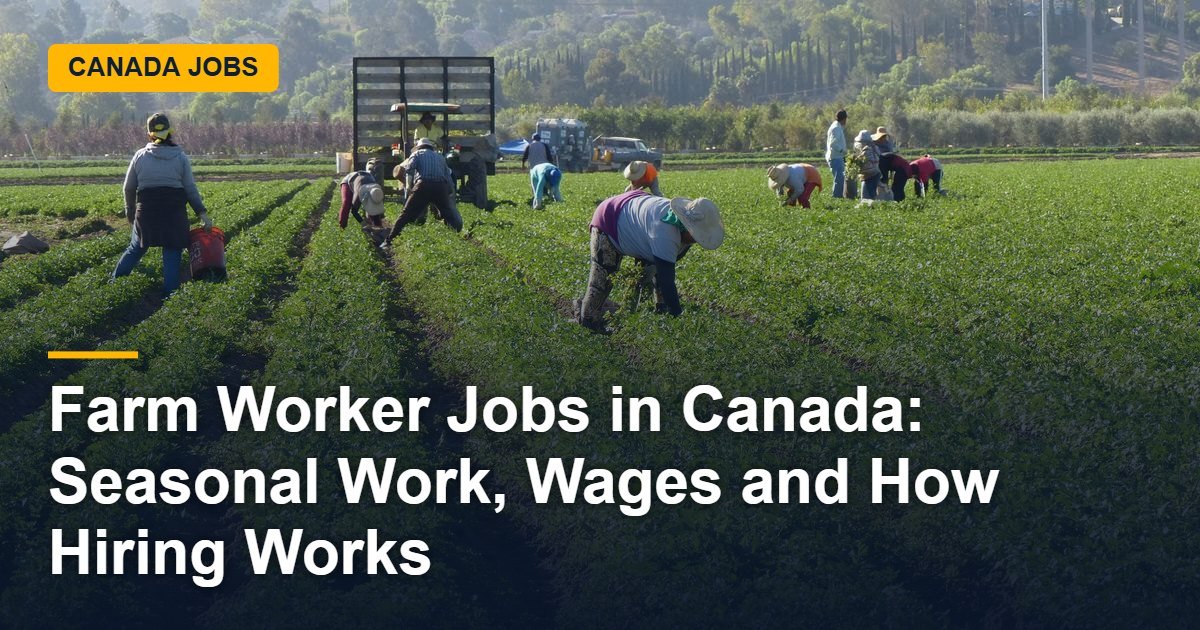
Canadian farms rely on tens of thousands of foreign workers every year to plant, pick and pack fruit, vegetables and flowers, and to work in greenhouses, dairies and poultry barns. Farm work is hard, but the hiring system is well established. Here is how it works.
Types of Farm Jobs
- Harvesting labourer: picking apples, berries, grapes and vegetables.
- Greenhouse worker: planting, pruning and packing tomatoes, cucumbers and peppers.
- General farm worker: operating machinery, irrigation and caring for livestock.
- Nursery worker: growing trees, plants and flowers.
- Packing and sorting: preparing produce for supermarkets.
When Is the Season?
Outdoor farm work runs mainly from spring to autumn, roughly April to October, with the busiest period at harvest time. Greenhouses, mushroom farms and livestock operations work all year.
How Foreign Workers Are Hired
Canada has dedicated agricultural routes within its Temporary Foreign Worker Program. The Seasonal Agricultural Worker Program is open only to workers from Mexico and participating Caribbean countries, through agreements between governments. Workers from other countries, including South Asia, are hired through the Agricultural Stream, where an individual employer obtains an LMIA and offers a contract.
What Employers Must Provide
Under the agricultural programmes, employers have extra duties. They are generally required to arrange suitable housing, help with transport to Canada and to the workplace, and make sure workers have health coverage. Wages must meet the rate set for the type of farm work in that province, and cannot be below the provincial minimum wage. The details are written in the employment contract, which you should read before travelling.
Requirements
- Good physical fitness. The work involves lifting, bending and long hours outdoors.
- Farm experience from your home country.
- Basic English or French is helpful but often not strictly required.
- Readiness to live in shared housing in a rural area.
How to Apply
- Search Job Bank for farm labourer, harvesting labourer and greenhouse worker positions with an LMIA.
- Apply directly to farms or through recruiters licensed in the province.
- After a job offer and approved LMIA, apply for your work permit on the official immigration website.
Know Your Rights
Foreign farm workers in Canada are covered by workplace safety laws and have the right to be paid for all hours worked, to keep their own passport and to report abuse without losing their status. Canada operates a confidential tip line for abuse of the Temporary Foreign Worker Program.
Frequently Asked Questions
Is farm work a route to permanent residence?
Some pilot programmes have offered a pathway for experienced agricultural workers, but availability changes. Check official sources.
Do I have to pay the farm for the job?
No. Recruitment fees must not be charged to the worker.
Note: This article is a general guide for job seekers, not a job offer. We are not a recruitment agency and we never ask for money. Pay and rules change, so always confirm details on official government websites and with the employer before you accept any job.