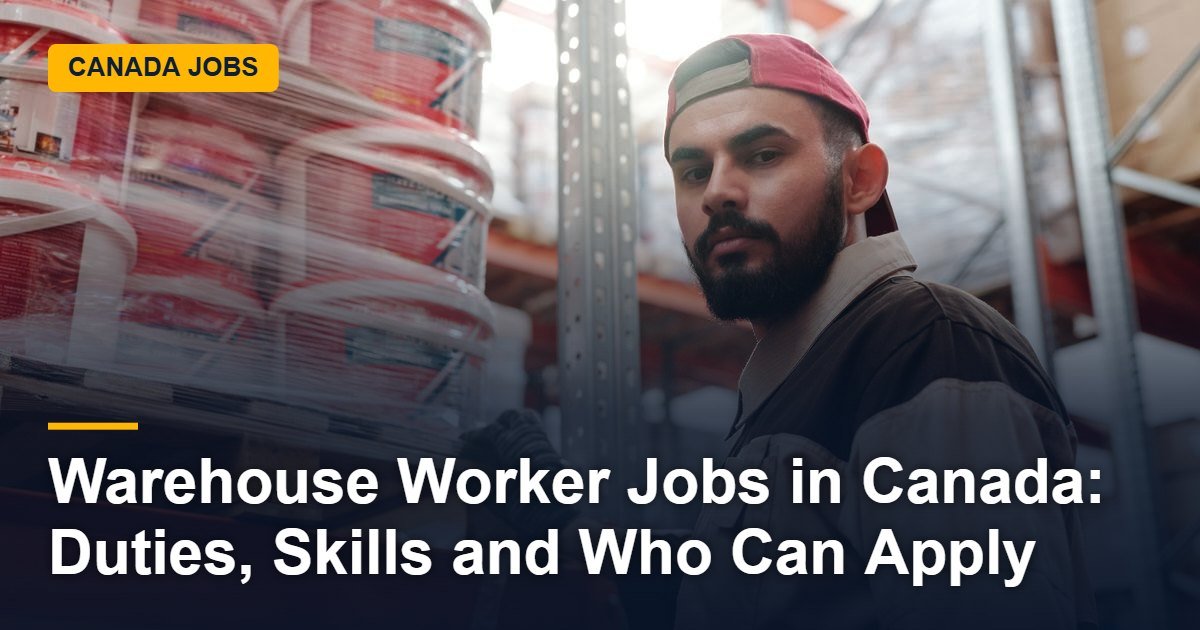
Warehouses and distribution centres are found around every large Canadian city, especially near Toronto, Vancouver, Calgary and Montreal. They employ material handlers, order pickers, packers and forklift operators. These jobs are a common first step for newcomers to Canada.
Everyday Duties
- Loading and unloading trucks by hand or with equipment.
- Picking items for customer orders using a handheld scanner.
- Packing, labelling and wrapping pallets.
- Counting stock and reporting damaged goods.
- Keeping work areas clean and following safety rules.
Skills and Requirements
- Physical fitness. Many postings mention lifting 20 kilograms or more.
- Basic English or French and simple maths.
- Safety boots and, in some workplaces, cold-storage clothing.
- A forklift or reach-truck certificate greatly improves your chances and pay.
- Flexibility for evening, night and weekend shifts.
Pay
Wages depend on the province, the shift and your skills. General labour starts close to the provincial minimum wage, while certified forklift operators and night-shift workers earn more. For accurate numbers, open the wage report for “material handler” on Job Bank, which shows the low, median and high hourly wages for each region of Canada.
Who Can Apply?
The great majority of warehouse postings are open only to people who are already allowed to work in Canada: citizens, permanent residents and temporary residents with a valid work permit. Because these jobs are easy to fill locally, employers seldom apply for an LMIA to bring warehouse workers from overseas, and the rules for low-wage LMIA positions became stricter in 2024. If an advertisement promises an overseas warehouse job with a free visa, treat it with great caution.
Best Ways to Get Hired
- Search Job Bank and well-known job sites for material handler, order picker and forklift operator roles.
- Register with staffing agencies that supply warehouses. Legitimate agencies do not charge job seekers.
- Prepare a simple resume that lists equipment you can operate.
- Take a recognised forklift course after you arrive.
Health and Safety
Canadian law gives every worker the right to safety training, to know about hazards and to refuse unsafe work. Follow lifting techniques, wear your protective equipment and report injuries immediately.
Frequently Asked Questions
Is experience required?
Many entry-level jobs train new staff. Experience and certificates lead to better pay.
Are these jobs permanent?
Both permanent and seasonal positions exist. Demand rises before the winter holiday season.
Note: This article is a general guide for job seekers, not a job offer. We are not a recruitment agency and we never ask for money. Pay and rules change, so always confirm details on official government websites and with the employer before you accept any job.